Technical guide
Long Jump Drills
Approach, takeoff, and landing drills from two Olympic finals. Small cues, big distance.
Why these drills work
I built this guide around the drills I learned over the years and built into my season as a professional athlete. They are simple on purpose. The long jump is a chain of small, precise movements performed at high speed. When each link is clean, the jump takes care of itself.
Work one phase at a time. Film yourself. Compare how a drill feels to how it looks. That gap between feel and reality is where most improvement lives.
Phase
The Approach
An athlete needs to know how many steps they are taking — that is something a coach can help set. The approach has a fixed number of steps, and each group of steps belongs to a different phase. The first two to three steps are the drive phase, where you push the ground back and establish your stride length. The middle steps are where you get into position, maintaining or slightly increasing stride length: hips lifted, legs cycling right underneath you. The last two steps are the penultimate and the takeoff step — you accelerate in, and your hips drop on the penultimate.
Acceleration Marks
Place four to six markers along the first 15–20 meters of the runway. The goal is to hit each mark with a slightly longer stride and faster rhythm — not by reaching, but by letting momentum build naturally. It will teach your nervous system what it feels like without overthinking.
Cue: Think 'push the ground behind you' rather than 'run fast.' Speed is the result, not the intention.
Rhythm Runs
Before you ever step on the runway, run your full approach on the track or turf, really emphasizing the different phases — drive, position, penultimate — without a takeoff. Stay tall and relaxed and let the rhythm become automatic.
Cue: The board is not a target to attack; it is a checkpoint you arrive at in rhythm.
Approach + Clap
Have a coach or partner clap on your penultimate stride. Your job is to land the takeoff foot on the board at the next clap. This builds timing between coach feedback and internal rhythm.
Cue: If you are early, shorten the back end of the approach; if you are late, add a small float step before the board.
Phase
The Takeoff
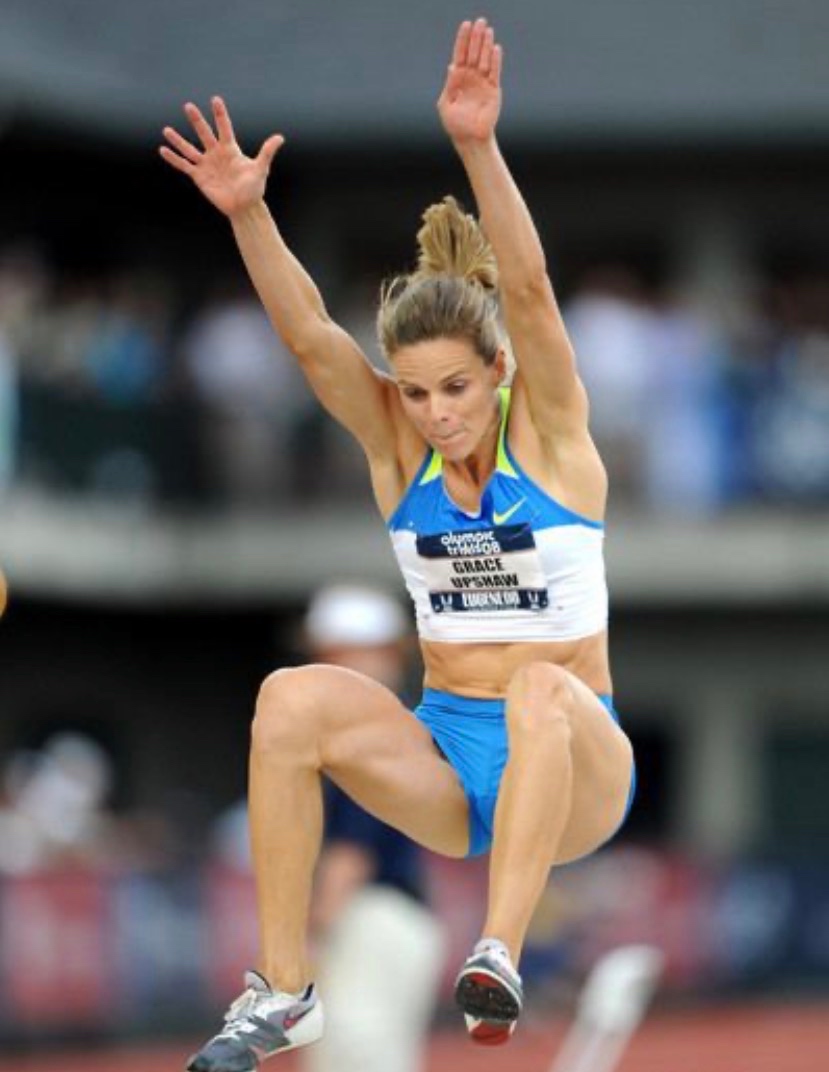
The takeoff converts horizontal speed into lift. The best jumps happen when the penultimate step lowers the hips just enough and the takeoff leg drives up and through.
Penultimate Step Hops
Mark a penultimate step and a takeoff board. Jog three steps, then attack the penultimate mark with a flat, fast foot contact and hop off the takeoff leg. The hop should feel forward and up, not straight up.
Cue: 'Fast foot down, big foot gone.' The quicker you can get off the takeoff leg, the less speed you bleed.
Short Approach Jumps (6–8 Strides)
Take off from a short run-up and jump into the pit. With less speed, you can feel positions: hips over the toe at takeoff, free knee driving, elbow blocking. This is where I fixed most of my technical flaws.
Cue: Block the elbow on the side opposite your takeoff leg — that stop is what sets your flight position.
Takeoff + Hold
Jump from a short approach and freeze your takeoff position in the air for one second before continuing into a landing. This builds body awareness and prevents premature cycling of the legs.
Cue: 'Hang before you work.' If you start cycling too early, you drop your hips and lose distance.
Phase
The Landing
A good landing can add 30–60 centimeters to a jump. The key is getting the feet out in front, pulling the hips forward, and keeping the torso from falling backward.
Standing Landings
Stand at the edge of the pit and fall forward into takeoff position, then snap the feet out in front and land in the sand. No run-up — just the landing motion. This isolates the most common mistake: feet too low, hips too far back.
Cue: 'Feet to the pit, hips to the heels.' Get the feet as far forward of your hips as possible.
Hurdle Hops to Sand
Set a low hurdle 1–2 meters from the pit. Hop over it and land in the sand with both feet extended. The hurdle forces you to lift the hips and prepare the legs for extension.
Cue: Lift the hips before you extend the legs. Extension without lift is just kicking air.
Run-Through Landing
Take a short approach, jump, and focus entirely on landing technique. Do not worry about distance. Count how many landings out of ten keep your torso from falling backward.
Cue: 'Chin over knees over toes at contact.' If any piece is behind the others, you are giving away centimeters.
Put it together
Start each session with one approach drill, one takeoff drill, and one landing drill. Add full jumps only after the pieces feel connected. Quality reps beat tired reps every time.